Angoville Au Plain church, American aid station during WW2
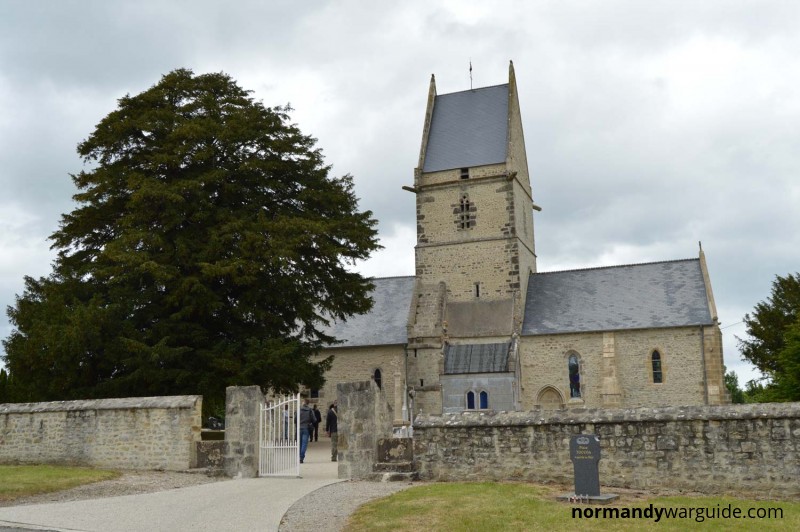
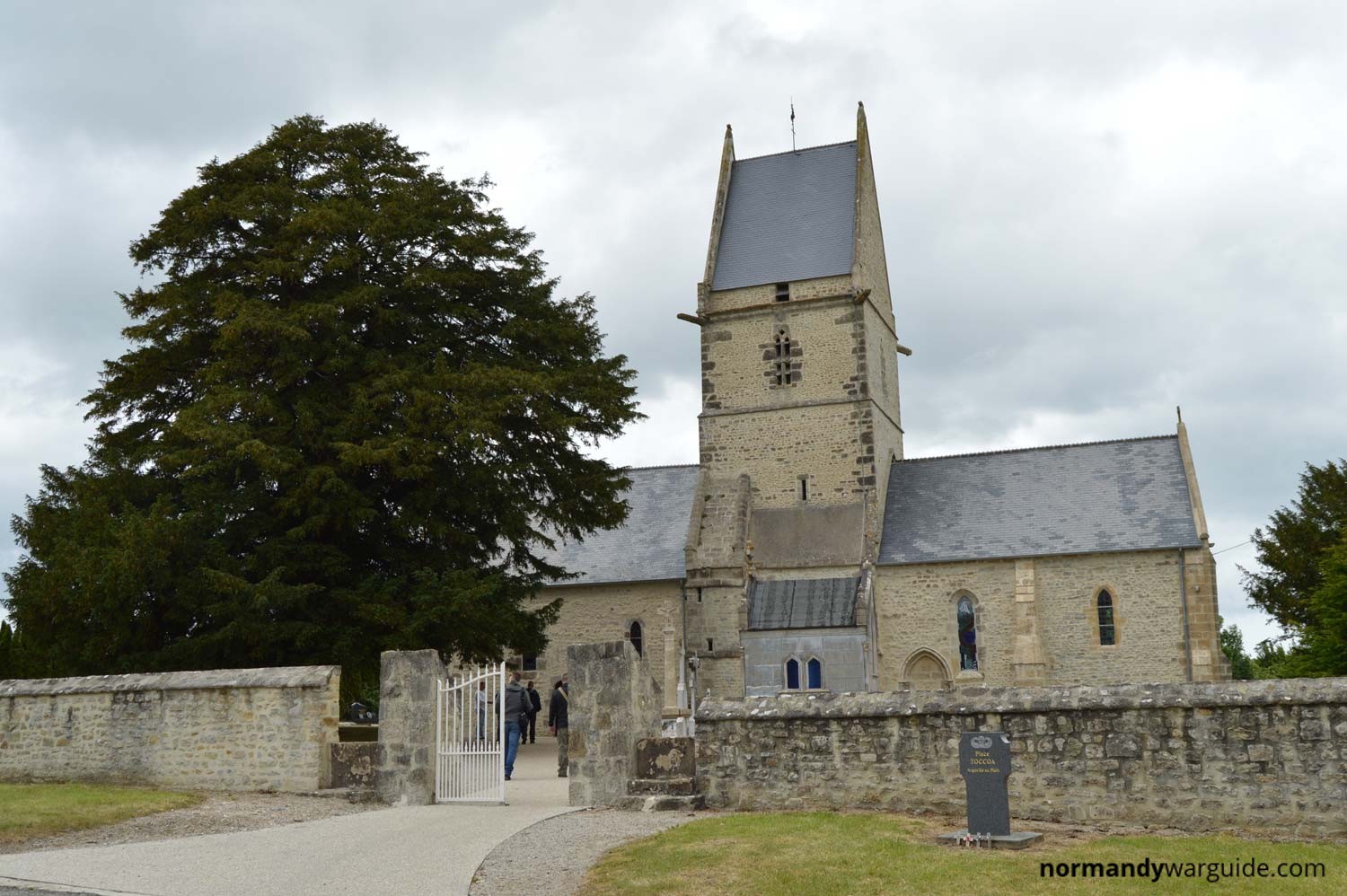
Tucked away in the small village of Angoville-au-Plain, this modest Norman church played a unique role during the D-Day landings. On 6 June 1944, as fighting spread across the surrounding countryside, two medics from the 101st Airborne Division turned the church into an aid station where they treated wounded soldiers from both sides and local civilians.
The Battle for Angoville-au-Plain
Located between Utah Beach and Carentan, Angoville-au-Plain lay directly in the path of the 101st Airborne’s paratroopers as they landed in the early hours of D-Day. Men from the 501st Parachute Infantry Regiment (PIR) were widely scattered during their drop, many coming down in and around the village. Their objectives included securing the causeways leading inland from Utah Beach and blocking German reinforcements heading towards the coast.
By dawn, the village was under heavy fire. German forces launched counterattacks, and fighting broke out among the narrow lanes and surrounding fields. Amid this, two American medics, Kenneth Moore and Robert Wright of the 501st PIR, set up an aid station inside the village church to tend to the wounded.
The Church as an Aid Station
Inside the stone walls of Église d’Angoville-au-Plain, Moore and Wright worked continuously for several days, treating the wounded from both sides, including American paratroopers, German soldiers, and local civilians. A Red Cross flag was displayed outside the church, and both German and American troops respected the neutrality of the site once its purpose became clear.
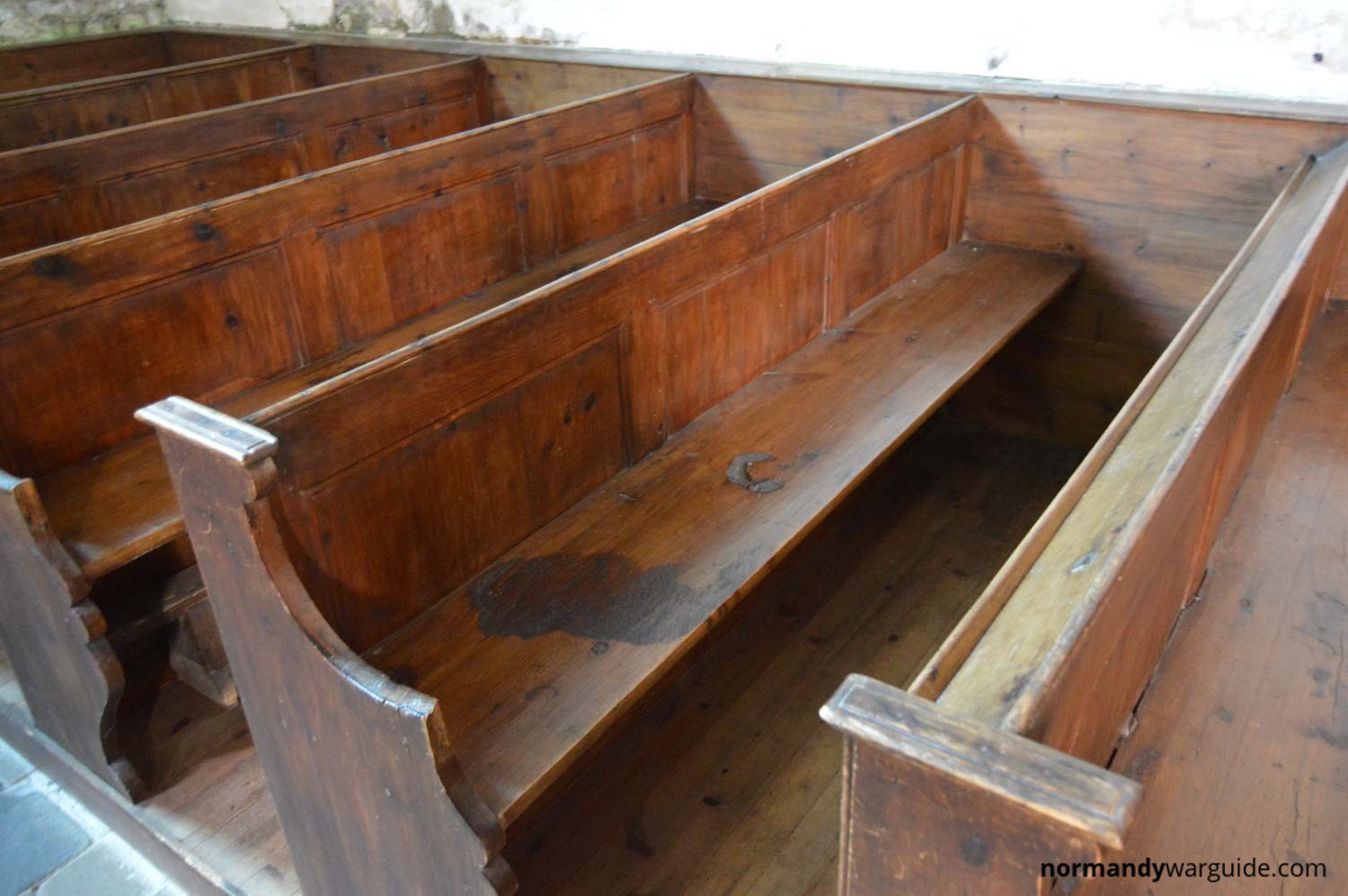
The wooden pews of the church still bear bloodstains from the soldiers who were treated there, serving as a quiet reminder of those events.
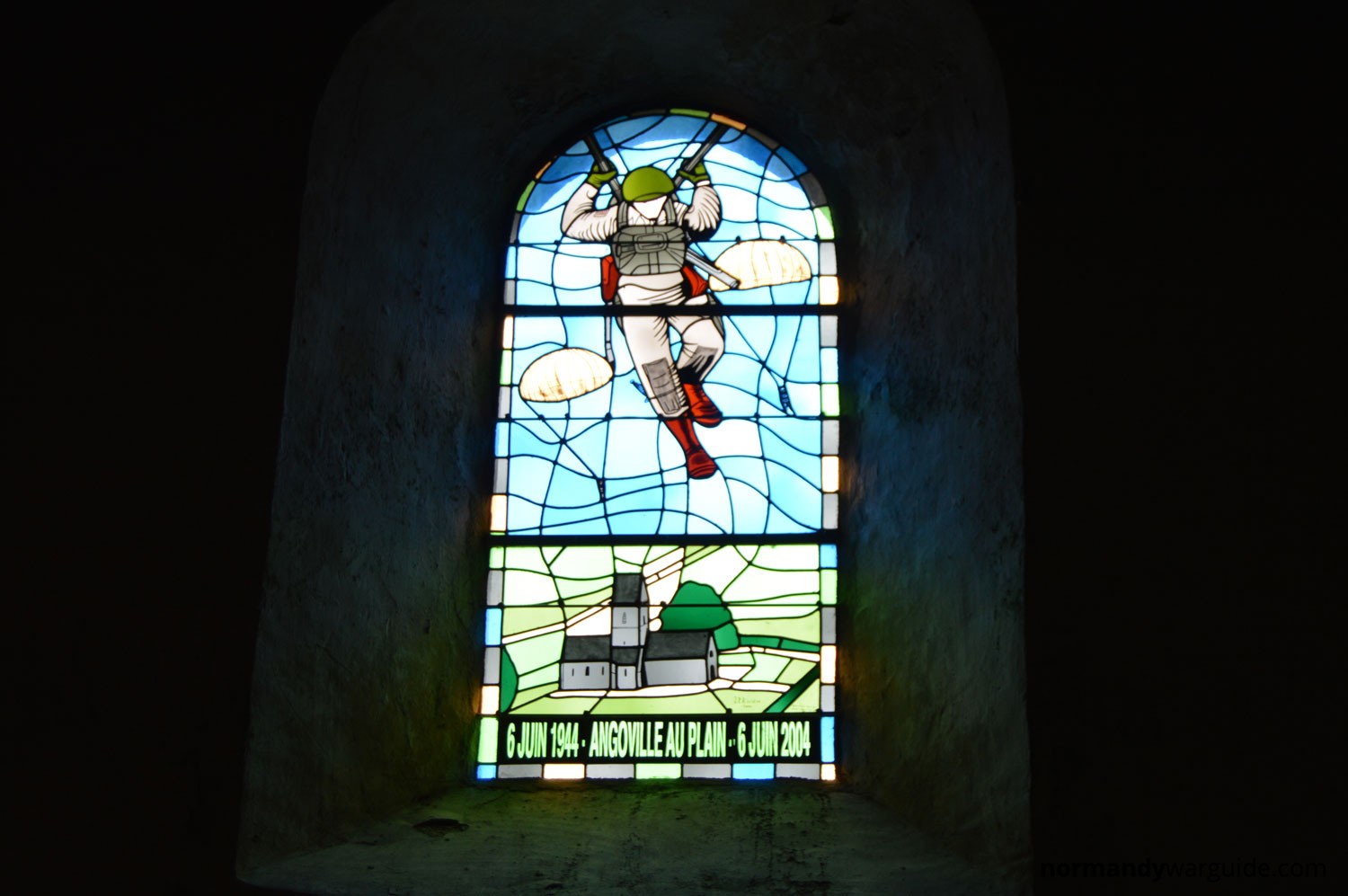
A stained glass window inside the church commemorates the actions of the medics. Installed in 2004 for the 60th anniversary of D-Day, it depicts a paratrooper descending above the church, with the inscription:
“6 Juin 1944 – Angoville au Plain – 6 Juin 2004.”
2nd Combat Medics Memorial
Moore and Wright are credited with treating around 80 wounded soldiers and civilians during and after the fighting for Angoville-au-Plain. Both survived the war and later returned to the village, where they were warmly welcomed by local residents.
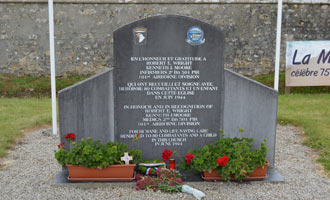
Outside the church stands the 2nd Combat Medics Memorial, which honours their service and the many other medics of the 101st Airborne who risked their lives to save others.
You can read more about this nearby memorial here
Visiting Angoville-au-Plain Church
The church remains an active place of worship, and visitors are asked to be respectful when entering.
At the church you can see:
- The blood-stained pews, preserved in place
- The stained glass windows honouring the medics and paratroopers
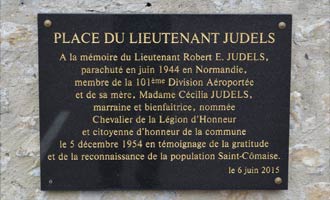
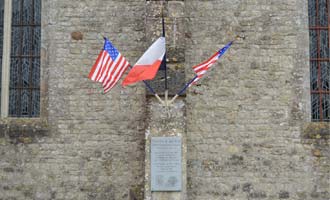
- Memorial plaques commemorating the events of June 1944
Angoville-au-Plain is located just north of Carentan, a short drive from Utah Beach. Parking is available nearby, and the village retains much of its quiet rural character, making it a peaceful place for reflection.